|
Copyright ©2009 by Paul Niquette. All rights reserved. |
|
 light is
supposed to be fast -- faster, certainly, than
other modes of transportation. "Faster the
better," we say. Flight has been optimized for
fast. The Jet Age sure did give us faster ways to
get from where we are to where we want to be. The
Jet Age did such a good job of it that for many
journeys, flight has become the only practical
mode of public transportation, displacing trains and
buses and ships. Fast has its costs, though... light is
supposed to be fast -- faster, certainly, than
other modes of transportation. "Faster the
better," we say. Flight has been optimized for
fast. The Jet Age sure did give us faster ways to
get from where we are to where we want to be. The
Jet Age did such a good job of it that for many
journeys, flight has become the only practical
mode of public transportation, displacing trains and
buses and ships. Fast has its costs, though...
The world is gradually becoming sensitized to both of these matters in all realms of human activity. Saving energy and protecting the environment have emerged as international priorities. Whereas new technologies are needed -- hoped for! -- conservation appears to be the most practical mitigation for the near term and beyond. One thing must be clear to everybody: Flight cannot benefit directly from many promising new technologies: fission and fusion, geothermal and solar-thermal, hydroelectricity and tides, hybrids and photovoltaics -- least of all wind. Meanwhile, the wheels seem to be coming off of the biofuels bandwagon...
...a severe set-back for alternative aviation fuels. Conservation, then, is key. "Going green" means giving up what flight does best. "Faster the better" won't -- well, fly. |
|
 |
|
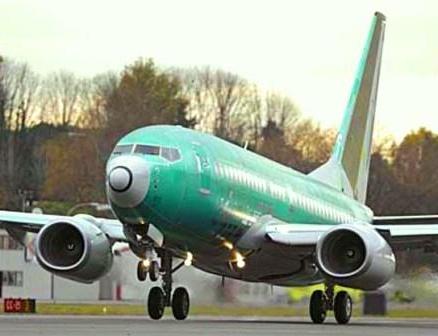
| After pushing back from the gate,
taxiing to the runway, and waiting in line for
departure, an aircraft must conduct three fundamental
phases of flight: [1] take-off and ascend to cruising
altitude, for terrain avoidance and favorable winds, [2]
cruise in level flight, preferably along the most direct
route, and [3] descend for the approach to
landing.
Flight routinely uses maximum allowable
power -- pushing
the
envelope -- for all three phases, even flying in
a shallow power-dive during descent top-of-the-green,
all of which, of course, consumes the most fuel.
Flight will do all of that to optimize for fast.
|
 Energy
Consumption
and Environmental Damage.
Energy
Consumption
and Environmental Damage.